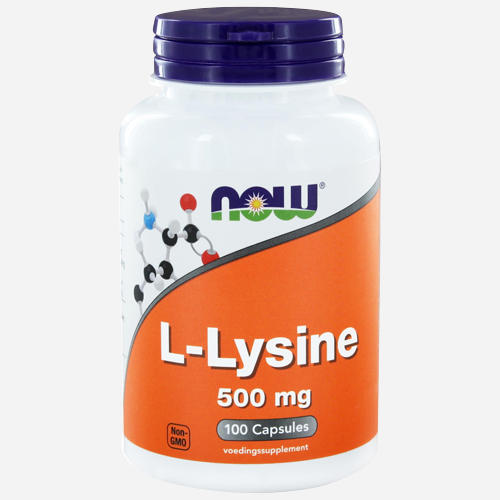
Lysine is an important essential amino acid required for the synthesis of various proteins of human body. Human body cannot synthesize lysine hence it should be consumed through diet for fulfilling its requirements in body. It is naturally present in various foods of both animal and plant sources, but animal sources are considered as comparatively richest source of lysine than plant sources.
Out of nine essential amino acids, lysine is the only one which is associated with preventing cold sores caused by herpes simplex virus. It also helps to promote immune system, mental health, and helps in rapid wound healing. Lysine is also associated with stimulating calcium uptake collagen formation, carnitine formation, tissue growth, repairing and development.
Lysine is now widely available in supplemented form where it can be taken by mouth or it can be applied directly to skin. It has seen that many athletes are recently using lysine for enhancing their performance.
Some information regarding lysine
- Lysine is an imperative α-amino acid, naturally present in its L- isomer form
- It is soluble in water
- It contains one amino group, one carboxylic group, one hydrogen molecules and a side chain containing (CH2)4NH2, (aliphatic side chain)
- It is a positively charged essential amino acid of great health importance
- Lysine is mainly present in muscle (animal source) in most concentrated form
Sources
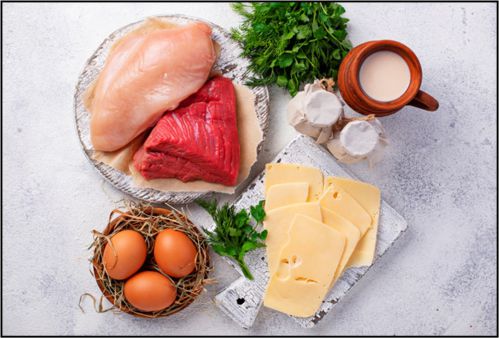
The below table shows an overview of both sources of lysine –
| Animal sources | Plant sources |
|
|
Recommended dietary allowance of lysine
- Adults should consume 8g of dietary lysine per day
- Children between the age group of 11 to 12 years require 44mg of dietary lysine per kg of their ideal body weight
- On a contrary, infants (0 to 12 months of age) require 97mg of dietary lysine per kg of their body weight for supporting their accelerated growth
Health benefits
Role on preventing cold sore by herpes simplex virus
- Cold sores are considered as a symptom of a chronic infection caused by herpes simplex virus. It is mainly characterized by developing fluid filled blisters on lip or corner of the mouth with severe pain and a burning sensation
- Lysine helps to prevent the infection by inhibiting replication of the respective virus and reduces the frequency of developing cold sore
- This virus requires arginine (an amino acid) for its multiplication, but lysine inhibits its multiplication by blocking arginine hence helps to prevent herpes infection
Role on reducing stress
- Lysine helps to reduce stress and stress induced anxiety as it blocks those receptors which are responsible for stress response
- It helps to reduce the secretion of cortisol hormone (stress hormone), which is considered as another important feature of relieving stress and it also helps to develop a feeling of refreshment
- It also associated with preventing schizophrenia in early stage and related mental disorders
Role on calcium absorption
- Lysine helps to increases calcium uptake through intestinal epithelial cell and increases calcium re-absorption through kidney which is associated with increasing calcium status of the body and helps to strengthen the bone
- The most significant effect of lysine on calcium is that it prevents urinary calcium losses. It has seen that individual who only consumes calcium shows significant losses of calcium through urine but individual who consumes calcium along with lysine shows less urinary calcium losses. So, consumption of lysine helps to calcium retention within body and hence prevents bone losses and several bone disorders
Role on fat metabolism
- Lysine helps to synthesize carnitine, which is an essentially required substance for beta oxidation of fat molecules that helps in fat metabolism
- Metabolism of fat is characterized by breaking down of fat molecules mainly for yielding energy (catabolism) and synthesis of fat molecules in body (anabolism)
- Beta oxidation is a catabolic reaction of fat, where fatty acid goes through oxidation and provides energy. This process has occurred within mitochondrial matrix.
- Carnitine helps to transport fatty acid molecule to mitochondrial matrix for carrying out beta oxidation process
Role on wound healing
- Lysine helps in quick wound healing as it acts as a potent binding agent and helps to increase the number of new cells at the site of wound and helps to repair the damage. This incidence is considered as the principle factor of healing process
- It has seen that lysine helps to accelerate healing process as it becomes more activated at the site of wound
Other health benefits
- Lysine helps to reduce hypertension
- Lysine along with catechin (an important antioxidant) shows significant role on preventing the risk of developing cancers
- It helps to prevent anxiety
- It helps to prevent losses of lean muscle and enhances muscle mass
- It helps to prevent plaque formation within blood vessels and reduces the risk of developing cardiovascular diseases
- It helps in the adequate growth of skin and hair
- Lysine helps in collagen synthesis and hence promotes the health of connective tissue
Deficiency disorders
Lysine is one of the most significant nutrients required for optimum growth and nourishment of body. If it is not consumed according to its requirements, then it would develop various deficiency disorders such as –
- Mental retardation
- Fatigue
- Hair loss
- Irritability
- Anaemia
- Growth retardation
- Anorexia
- Poor concentration
- Reproductive system related complications such as absence of secondary sex characteristics with un-descended testes in male
- Obesity
- Imbalance in eye muscle affecting vision
- Abnormalities in facial structure
- Enlargement of liver and spleen
Hyperactivity of lysine
- Lysine consumed from diet does not show any toxic effects whereas consumption of too much lysine supplements can cause some adverse effects within body
- It often causes nausea, vomiting, diarrhea and other abdominal discomforts
- Women during pregnancy and lactation should avoid lysine supplementation and it is better to consume lysine only through dietary sources
- Individual suffers from renal disorders should keep away from lysine supplements as excessive consumption of lysine supplementation would develop harmful toxic effects
General guidelines of using lysine
As mentioned above, lysine should consume daily through diet or supplements to avoid its deficiency disorders, but some considerations should be taken to utilize lysine completely which include –
- Lysine requires Vitamin B2, B3, B6, Vitamin C, iron and glutamine acid for its absorption and metabolism. So, deficiency of the above stated nutrients would also cause lysine deficiency. So, an individual should consume all of these nutrients along with lysine
- Deficiency of the above stated nutrients directly interfere with lysine metabolism and causes some life-threatening disorders like tyrosinemia, cystinuria and lysinuric protein intolerance that should be treated properly otherwise it would cause deadly complications
References and further reading
These references were supplied with the article and are provided so readers can examine the supporting material.
- Azevedo, C. and Saiardi, A., 2016. Why always lysine? The ongoing tale of one of the most modified amino acids. Advances in biological regulation, 60, pp.144-150.
- Badenhorst, T., Svirskis, D. and Wu, Z., 2016. Physicochemical characterization of native glycyl-l-histidyl-l-lysine tripeptide for wound healing and anti-aging: a preformulation study for dermal delivery. Pharmaceutical development and technology, 21(2), pp.152-160.
- Cai, W.C., Liu, W.B., Jiang, G.Z., Wang, K.Z., Sun, C.X. and Li, X.F., 2018. Lysine supplement benefits the growth performance, protein synthesis, and muscle development of Megalobrama amblycephala fed diets with fish meal replaced by rice protein concentrate. Fish physiology and biochemistry, 44(4), pp.1159-1174.
- Hall, C.J. and da Costa, T.P.S., 2018. Lysine: biosynthesis, catabolism and roles. WikiJournal of Science, 1(1), p.1.
- Hayamizu, K., Oshima, I., Fukuda, Z., Kuramochi, Y., Nagai, Y., Izumo, N. and Nakano, M., 2019. Safety assessment of l-lysine oral intake: a systematic review. Amino acids, 51(4), pp.647-659.
- Mailoo, V.J. and Rampes, S., 2017. Lysine for Herpes Simplex Prophylaxis: a review of the evidence. Integrative Medicine: A Clinician's Journal, 16(3), p.42.
- Vuvor, F., Mohammed, H., Ndanu, T. and Harrison, O., 2017. Effect of lysine supplementation on hypertensive men and women in selected peri-urban community in Ghana. BMC nutrition, 3(1), p.67.
- Wendisch, V.F., 2017. L-Lysine. In Industrial biotechnology: products and processes (Vol. 4). Weinheim, Germany: Wiley‐VCH Verlag GmbH & Co. KGaA.