
Magnesium is an important naturally occurring mineral and it is mainly important for the normal functioning of digestive system, nerves and muscles. It also helps in protein synthesis and helps in regulating plasma glucose level and blood pressure. Consumption of magnesium in small extent can fulfill its requirement as it is a trace element, but if not consumed daily it would develop harmful deficiency disorders, especially neuromuscular irritabilities and other related complications. The deficiencies should treat otherwise it would become fatal. Recently, magnesium is commercially available in supplementary form. Individual who does not consume magnesium through diet can use magnesium supplements for meeting its requirement without no or less side effects.
Some important information regarding magnesium
- It has found that among all mineral, magnesium is the fourth abundant mineral present in body
- About 20g of magnesium is present in entire body, among which 70% is present in bone combined with calcium and phosphorus and remaining 30% of magnesium is found in body fluids and soft tissues
- Normal serum concentration of magnesium is 2 to 3 mg per dl. Diagnosis of serum magnesium level helps to indicate magnesium deficiency or toxicity easily
- Magnesium is absorbed through intestine with the help of a carrier system and about 50% of dietary magnesium is absorbed which is responsible for performing its respective tasks
Sources
Foods, rich in magnesium are listed below –
- Green leafy vegetables
- Roots and tubers
- Nuts
- Beans
- Whole grain cereals
- Fruits
- Meat
- Milk and dairy products

Health benefits of magnesium
Role on digestion
- Magnesium helps to activate digestive enzymes and facilitate digestion. It has found that without magnesium, digestion cannot occur properly and develop various digestive disorders
- Magnesium acts as co-factor for several enzymes (such as hexokinase, phosphoglucokinase), which helps in glycolysis process (synthesis of pyruvate from glucose). Glycolysis is the first step of synthesizing ATP (energy) from glucose
- Preparation of magnesium salt with citric acid is commonly used as laxatives, which helps to increase water retention in intestine and helps to clear stool
Role on heart
- Magnesium is essential for maintaining proper heartbeat and deficiency of magnesium is associated with developing the risk of arrhythmias, a condition describes by irregular heart beats
- Magnesium helps in the transportation of calcium and potassium ions in cardiac muscle, which helps in the transduction of nervous signal into it, resulting in cardiac muscle contraction
- Magnesium plays an important role in coordinating the activity of cardiac muscle and nerves that helps the heart to beat properly
- Magnesium also helps in regulating blood pressure
- It helps to prevent palpitation
Role on preventing diabetes
- Diabetes mellitus is a very common metabolic disorder which is characterized by elevated blood sugar level due to improper functioning of insulin hormone. Several researches and studies have shown that there is a relation between magnesium and insulin. Magnesium helps to improve insulin resistance (Kumar et al., 2019)
- Magnesium helps in glucose metabolism. It participates in the enzymatic reaction of glycolysis, where glucose is converted into pyruvic acid, which helps to liberate energy through TCA cycle and electron transport chain. It helps to utilize glucose completely by producing energy and inhibits unnecessary glucose accumulation within blood
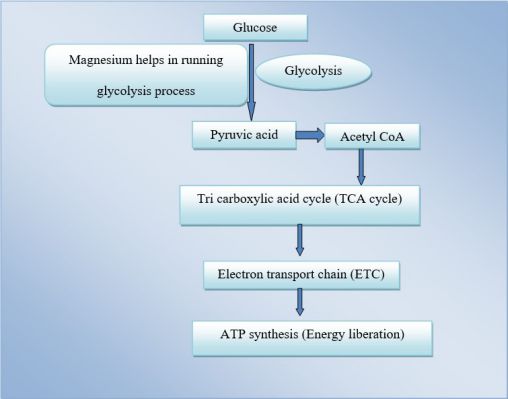
- It also helps to enhance insulin activity that helps to transport glucose from blood to liver and reduces glucose concentration in blood
- It has found that individual who have a low level of magnesium are prone to develop hyperglycemia
Role on endurance
- Prolong physical activities or exercise is responsible for the production of lactic acid in muscle resulting in fatigue and muscle pain, which reduces the ability of performing tasks
- Magnesium helps to reduce the load of lactic acid from muscle and increases glucose concentration by transporting glucose to muscle from liver
- This glucose is then utilized by the muscle for liberating energy, which helps the muscle to perform well and hence helps to boosting up the ability of physical performance
Role on nervous system
- Several researches and studies have shown that magnesium helps in neuromuscular conduction and nerve impulse transmission throughout the body (Kirkland and Holton, 2018)
- It helps to prevent unnecessary excitation of neuronal cell and inhibits cell death, which enhances the functioning of nervous system
- It helps to prevent several neurological disorders such as Alzheimer’s disease, migraine, chronic pain and Parkinson’s disease
Other functions
- It helps to prevent depression
- It also used as a preventive measure for osteoporosis due to its anti-inflammatory action
- It is required for synthesizing proteins, DNA and RNA
- It helps to prevent premenstrual syndromes
- It also helps in the formation of healthy bones
- It is used as a good preventive measure for treating anxiety
Recommended dietary allowance of magnesium
Adult male should consume 350mg of magnesium whereas adult female should consume 300mg of magnesium per day. It is considered as the exact recommended dose of magnesium in which extent it is required for performing its respective biochemical functions within body. If an individual consumes magnesium as per recommendation, they are found not to develop any deficiency disorders or toxic symptoms.
Deficiency disorders of magnesium
- Electrolyte imbalance, alcoholism, diarrhea, poor magnesium absorption from intestine (secondary metabolic disorder), increased urinary losses, malnutrition and cirrhosis of liver are the main causes of magnesium deficiency
- Deficiency of magnesium is related with the manifestation of other health complications such as hypokalemia (reduced blood potassium level), hypocalcemia (reduced blood calcium level), diabetes mellitus, osteoporosis, cardiac complications and neurological disabilities
- It is also responsible for developing several symptoms that include –
- Muscle spasms
- Tremor
- Muscle cramps
- Tingling
- Numbness
- Seizures
- Muscle spasticity
- Poor coordination between nervous system and body
- Personality changes
- Abnormal heart rhythm
- Cardiac arrest
- Loss of appetite
- It is important to treat magnesium deficiency immediately after diagnosis otherwise it would cause severe damage to health
Toxic effect of consuming too much magnesium
- Elevation in blood magnesium level is termed as hypermagnesemia, which is a condition caused by excessive magnesium consumption.
- It develops various adverse symptoms include, nausea, diarrhea, vomiting, lethargy, low blood pressure, respiratory distress, muscle weakness and abnormalities in electrical conduction in heart
- It has shown that serum magnesium level between 7 to 12mg per dl is considered as first degree (mild) hyperactive level and causes damages to heart and lungs. Serum magnesium level more than 12mg per dl is considered as the second degree (moderate) of hyperactivity, which is manifested by hyperventilation and muscle paralysis. Serum magnesium level more than 15mg per dl is considered as the third degree (severe) hyperactive level and causes coma
So, it can be stated that magnesium is an important micronutrient primarily required for achieving a better health but it should consume in required amount to avoid life threatening health issues.
References and further reading
These references were supplied with the article and are provided so readers can examine the supporting material.
- Baker, W.L., 2017. Treating arrhythmias with adjunctive magnesium: identifying future research directions. European Heart Journal–Cardiovascular Pharmacotherapy, 3(2), pp.108-117.
- Barbagallo, M. and Dominguez, L.J., 2018. Magnesium Role in Health and Longevity. In Trace Elements and Minerals in Health and Longevity (pp. 235-264). Springer, Cham.
- Khan, A.A., Sbayi, A. and Schlingmann, K.P., 2018. Magnesium Homeostasis. Primer on the Metabolic Bone Diseases and Disorders of Mineral Metabolism, p.173.
- Kirkland, A.E., Sarlo, G.L. and Holton, K.F., 2018. The role of magnesium in neurological disorders. Nutrients, 10(6), p.730.
- Kumar, P., Bhargava, S., Agarwal, P.K., Garg, A. and Khosla, A., 2019. Association of serum magnesium with type 2 diabetes mellitus and diabetic retinopathy. Journal of Family Medicine and Primary Care, 8(5), p.1671.
- Nielsen, F.H., 2017. Magnesium: Basic Nutritional Aspects. In Molecular, Genetic, and Nutritional Aspects of Major and Trace Minerals (pp. 307-317). Academic Press.
- Tarleton, E.K., Littenberg, B., MacLean, C.D., Kennedy, A.G. and Daley, C., 2017. Role of magnesium supplementation in the treatment of depression: A randomized clinical trial. PLoS One, 12(6), p.e0180067.
- Vink, R., 2016. Magnesium in the CNS: recent advances and developments. Magnesium Research, 29(3), pp.95-101.