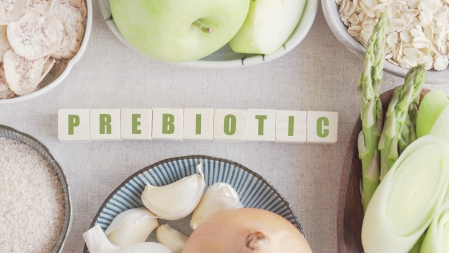
Prebiotics are basically non digestible dietary fibre that act as feeding substrate for intestinal beneficial microbes and promotes their growth. The friendly bacteria which are present in human gut ferment the prebiotic and produce some important organic substances (nutrients) that promote the growth of colonic cells and gastrointestinal health.
Types
Prebiotics are generally oligosaccharides (carbohydrates) in nature, and they are broadly classified in five classes which include –
Fructans
- This type of prebiotics is made up of inulin and fructo oligosaccharide (FOS)
- They have a linear chain of fructose with a terminal glucose molecule and the chain length of fructan is one of the most significant features responsible for determining the bacteria which can be able to ferment them
- It is associated with stimulating lactic acid bacteria
Galactose oligosaccharides (GOS)
- It is another type of prebiotics which are further classified into two groups that are – i) GOS with excess galactose (at the position of C3, C4 or C6) and ii) GOS which is produced by the enzymatic transglycosylation of lactose
- It helps to stimulate the growth of bifidobacteria. It has seen that bifidobacteria in infants are highly incorporated with GOS that is related with stimulating the overall health status of infants
- It also helps to enhance the growth of lactobacilli, enterobacteria and firmicutes
Starch and glucose derived oligosaccharides
- The starch which is resistant to upper gut digestion are considered as resistant starch and it also classified as an effective prebiotic
- It is associated with promoting the health by producing high level of butyrate within body
Non carbohydrate oligosaccharides
- Basically, carbohydrates are the most promising constituents that fulfill the criteria of prebiotics but there are some non-carbohydrate substances available which can also be classified as prebiotics and show significant health benefits
- They are associated with stimulating the growth of especially lactic acid bacteria
Other oligosaccharides
- The oligosaccharides which are originated from pectin (a polysaccharide) are known as pectic oligosaccharides (POS) and classified as prebiotic
- They are associated with enhancing the gastrointestinal health
Sources
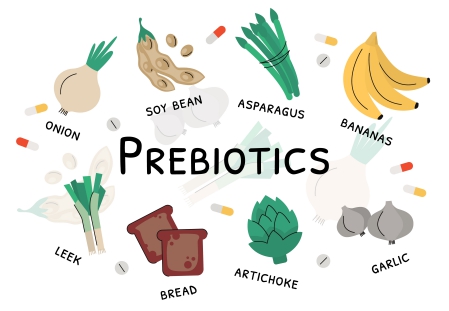
Foods which are considered as the best prebiotics are listed below –
- Garlic
- Onion
- Leak
- Cabbage
- Chickpeas
- Soybean
- Kidney bean
- Chicory
- Bananas
- Crushed apples
- Grapefruits
- Watermelon
- Oats
- Barley
- Almonds
- Flaxseeds
- Jerusalem artichokes
Health benefits
Role on intestinal health
- It is one of the most important substances used for improving gastrointestinal health. Intestinal friendly microbes use prebiotics as their food, which helps them to grow properly.
- It enhances the load of intestinal beneficial bacteria which are responsible for producing prebiotic fermented substances within gut, that promote the growth of colonic cells and reduce the risk of developing colorectal cancers
- It is associated with stimulating colonic peristalsis that helps to enhance bowel movement and prevents constipation and colonic pouch formation
- It also helps to prevent irritable bowel syndrome which is characterized by severe abdominal pain and chron’s disease that is characterized by development of inflammation in any parts of gastrointestinal tract. It has seen that especially consumption of FOS significantly improves the condition
Role on immunity
- It helps to boost up the immunological responses of body as it helps to promote the growth of beneficial intestinal bacteria
- It also reduces the load of harmful bacteria and inhibits their ability to bind with intestinal epithelium, hence prevents their penetration within body through intestinal epithelial cells and protects the body against those harmful microbes
- It is associated with enhancing the expression of cytokines and promotes immunity
- Several researches have shown that consumption of oligofructose and inulin mixture helps to enhance the antibiotic response towards viral vaccines (Davani-Davari et al., 2019)
- Consumption of GOS is associated with enhancing the concentration of interleukin in body and improves the function of natural killer cell which helps to increase immunogenicity and protects the body from harmful antigens
Role on nervous system
- Gastrointestinal tract is connected with the nervous system (especially CNS) through gut-brain axis and mainly it affects the brain through vagus nerve
- It helps to stimulate the synthesis of neurotransmitter, synaptic proteins and neurotropic factors which are associated with enhancing the function of brain and promotes nervous stimulus transduction effectively throughout the body
- It helps to influence memory, mood, learning ability and prevents several psychological disorders by enhancing the growth, balance and composition of beneficial bacteria within body
- Hepatic encephalopathy is a deadly health complication caused by accumulation of ammonia and responsible for developing several neurological disorders such as impairment in speech, personality, memory, movements and cognitive ability and it may leads to coma and death if not treated. Whereas consumption of prebiotic lactulose helps to reduce the level of ammonia in gut and helps to improve the condition
Role on weight management
- It helps to prevents obesity as it helps to reduce the synthesis of fat within body
- Intestinal low-grade inflammation is related with alteration of glucose metabolism and fat absorption which are considered as one of the most significant cause of obesity. Prebiotic helps to reduce this type of low-grade inflammation and hence reduces the susceptibility of obesity
- It helps to secrete peptide YY that reduces appetite leads to reduced food intake
- Ghrelin is a hormone which is associated with promoting adiposity and appetite and it is considered as a principle causative factor of obesity. Consumption of prebiotic helps to reduce ghrelin secretion and helps to prevent the risk of developing obesity
Role on nutrients absorption
- Prebiotic helps to enhance the growth of intestinal beneficial microbes that is associated with enhancing intestinal health and functions and leads to stimulate the digestion and absorption of nutrients
- It has seen that prebiotic is responsible for acidifying the gut lumen that is related with increasing the solubility of minerals within gut and facilitates their absorption
- It mainly helps to enhance the absorption of calcium and magnesium and helps to prevent their respective deficiency disorders
-
Role on cardiac health
- It helps to prevent cardiovascular diseases by reducing inflammatory elements responsible for damaging the myocardium
- It is also related with improving lipid profile and prevents fat accumulation within body leads to reduce the risk of atherosclerosis
- It has seen that consumption of prebiotic inulin is associated with reducing triglyceride level as well as lipogenesis (synthesis of fat) in body and these features help to protect the heart
- It also helps to balance the electrolytes and minerals level of the body and hence helps to regulate blood pressure and prevents hypertension
Role on skin
- It is associated with decreasing the risk of developing skin diseases and allergic reaction
- It also helps to improve skin barrier by stimulating dermal expression and hence enhances its defensive action
Role on preventing cancers
- It has antioxidant activity and helps to reduce free radicals and ROS, which is related with preventing the risk of developing cancers
- It helps to inhibit oxidative damage of the body and hence helps to suppress the growth of carcinogenic cells
Risk factors
Consumption of prebiotic is a healthy choice, but it should keep in mind that consumption of prebiotic in large amount may develop abdominal bloating due to excessive production of gas.
References and further reading
These references were supplied with the article and are provided so readers can examine the supporting material.
- Davani-Davari, D., Negahdaripour, M., Karimzadeh, I., Seifan, M., Mohkam, M., Masoumi, S.J., Berenjian, A. and Ghasemi, Y., 2019. Prebiotics: definition, types, sources, mechanisms, and clinical applications. Foods, 8(3), p.92.
- Delcour, J.A., Aman, P., Courtin, C.M., Hamaker, B.R. and Verbeke, K., 2016. Prebiotics, fermentable dietary fiber, and health claims. Advances in Nutrition, 7(1), pp.1-4.
- Joshi, D., Roy, S. and Banerjee, S., 2018. Prebiotics: a functional food in health and disease. In Natural products and drug discovery (pp. 507-523). Elsevier.
- Korcz, E., Kerényi, Z. and Varga, L., 2018. Dietary fibers, prebiotics, and exopolysaccharides produced by lactic acid bacteria: potential health benefits with special regard to cholesterol-lowering effects. Food & function, 9(6), pp.3057-3068.
- Malekpour, A., Forouzesh, M., Gholamzadeh, S., Ghasemi, Y. and Moaddeli, M.S., 2018. Recent findings in production and health benefits of prebiotics; a review of literatures. Trends in Pharmaceutical Sciences, 4(4), pp.197-204.
- Quigley, E.M., 2019. Prebiotics and probiotics in digestive health. Clinical Gastroenterology and Hepatology, 17(2), pp.333-344.
- Saville, S. and Saville, B.A., 2016. Shining a light on prebiotics: their role in human health. AGRO FOOD INDUSTRY HI-TECH, 27(5), pp.III-VI.
- Shokryazdan, P., Jahromi, M.F., Navidshad, B. and Liang, J.B., 2017. Effects of prebiotics on immune system and cytokine expression. Medical microbiology and immunology, 206(1), pp.1-9.