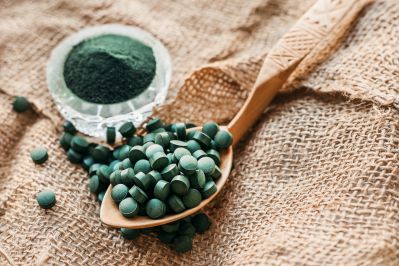
Spirulina is a blue-green algae or cyanobacteria, which acts as an important nutraceutical. It is considered as one of the most important nutrient dense supplementary products of great health importance.
Nutritional profile
- It contains significant amount of carbohydrates but does not contain enough fibre
- It is considered as a rich source of plant-based protein and known as “lean, green, protein machine". It contains various amino acids, which are essentially required for supporting general growth and development
- It contains unsaturated fatty acids
- It contains several vitamins like Vitamin A, Vitamin C, Vitamin K, thiamin, riboflavin, niacin, pyridoxine and folic acid
- It also contains various trace elements like calcium, phosphorus, sodium, potassium, iron and magnesium
- It contains numerous biologically active compounds responsible for exerting antioxidant, anti-inflammatory and anti-carcinogenic activities, which include flavonoids, alkaloids, glycosides, saponin and phenol
Biological properties
Antioxidant properties
- It helps to prevent oxidative damages of the body by scavenging free radicals
- It is also associated with activating antioxidant enzyme and inhibits free radical and ROS induced oxidation
- It helps to inhibit lipid peroxidation and hence reduces oxidative stress
- It helps to protect important biological substances of body especially DNA from oxidation and prevents their damage
- It is also related with increasing the activity of catalase and superoxide dismutase, which are allied with catalyzing the dismutation of superoxide radicals that protect the body from reactive oxygen species
- According to recent researches, it has seen that spirulina plays significant role in preventing the damages of skeletal muscle caused by exercise induced oxidative stress (Wu et al., 2016)
Anti-inflammatory properties
- Phycocyanin is the principal component of spirulina exerts anti-inflammatory activities
- It is associated with inhibiting the production of inflammatory signaling molecules and prevents inflammation, pain and swelling
- It helps to decrease the risk of developing chronic diseases by reducing the prevalence of inflammatory events
Immunomodulatory properties
- It is associated with stimulating the production of antibodies
- It also helps to regulate (up regulate or down regulate) the expression of genes (cytokine encoding gene), which is responsible for inducing immunomodulatory responses
- It helps to regulate ERK1/2 pathway that helps to control the cell cycle machinery that involves cell growth as well as cell cycle progression
- It also regulates p38 pathways, which is associated with releasing cytokines from neutrophils and macrophages
- It plays significant role in controlling various cellular process like proliferation, apoptosis, embryonic development etc.
Anti-carcinogenic properties
- It helps to reduce the susceptibility of developing cancers by suppressing malignant cell growth through inducing apoptosis (as mentioned above) and helps to prevent their metastasis
- It also helps to reduce tumor size
- It is mainly effective against oral cancers and helps to treat oral submucous fibrosis
Antitoxic properties
- It has potent antitoxic properties, which help to protect the body from the harmful effects of heavy metals and pollutant
- It shows strong effect against some pollutants like arsenic, lead, iron, mercury and fluoride
Health benefits
Role on metabolism
- It is closely related with boosting up the entire metabolic processes of the body
- It mainly helps to increase BMR (basal metabolic rate) that increases calorie expenditure
- It also helps to support general growth of the body as it is rich in protein and acts as energy booster as it provides desirable calorie
Role on mental health
- It helps to prevent mood related disorders
- It has seen that spirulina is a good source of tryptophan (an amino acid), which is closely related with stimulating serotonin production that helps to promote mental health by regulating mood as well as happiness
- It also helps to prevent anxiety and depression
Role on children health
- Its protein content is accountable for promoting overall growth and development of children
- It plays important role in enhancing tissue synthesis
- It also helps in the growth of central nervous system and improves cognitive ability as well as concentration
- It helps to improve eyesight
- It also helps in muscle development
- It also helps to prevent anxiety and depression
Role on immunity
- It helps to increase the resistance power of the body by enhancing immunity
- It also helps to improve the functionality of T cells and B cells
- It is associated with synthesizing infection fighting proteins and antibodies, which help to improve immunity
Role on preventing allergy symptoms
- It helps to prevent allergy by reducing the concentration of histamine within body
- It helps to treat allergic rhinitis (an inflammation of nose caused by the overreaction of immune system to allergens of air) and its consequences, which involves sneezing, itching, nasal congestion and runny nose
Role on digestive health
- It helps in digestion by improving the synthesis of digestive enzymes
- It also helps to reduce the prevalence of intestinal infections
- It helps to improve gut health by supporting the growth of beneficial intestinal flora
Role on improving endurance
- Muscle fatigue is the main cause of decreasing muscular activity or the ability of performing task. Spirulina plays important role in reducing muscle fatigue by declining the prevalence of exercise induced oxidative damages of muscle
- It also helps to enhance muscle strength and energy level, which help in improving endurance
Role on weight management
- It helps to reduce body weight by enhancing the catabolic rate (burning of fat) of the body
- It is associated with altering the gut microbiota for having lipid lowering activity that helps to prevent obesity
- Prevotella component of spirulina is responsible for decreasing the total concentration of lipid within blood by enhancing bile metabolism that facilitates weight reduction
Medicinal applications
Role on maintaining lipid profile
- It is widely used to reduce total cholesterol concentration within blood including, triglyceride, LDL and VLDL
- It helps to increase the concentration of HDL (good cholesterol) in blood and improves the ratio of LDL and HDL
- It is better to consume spirulina for achieving a good lipid profile
- It also helps to prevent the oxidation of LDL and thus reduces the occurrence of several diseases
Role on promoting cardiac health
- It acts as an effective therapeutic agent for inhibiting cardiovascular diseases (like coronary artery disease, strokes, myocardial infractions etc.) by lessening the prevalence of cardiac inflammatory events
- Its lipid lowering activity is also associated with reducing the prevalence of atherosclerosis
- It also helps to protect the heart from oxidative damages
- It helps to reduce hypertension, which is also related with promoting cardiac health
It is widely used as a preventive measure for anaemia, as it helps in hemoglobin synthesis
It helps to reduce the susceptibility of type 2 diabetes hence it should be consumed by diabetic patients. It has seen that spirulina is able to decrease the HbA1c level (marker of blood sugar level) from 9% to 8% and decreases the risk of death (diabetes related) by about 21%
Risk factors
- Some individual often experiences nausea, headache, pain and insomnia
- It may develop allergic reaction in some people
- Individual suffer from phenylketonuria should avoid its usage
- It is better to avoid spirulina if an individual suffers from auto-immune disease like rheumatoid arthritis, multiple sclerosis etc.
References and further reading
These references were supplied with the article and are provided so readers can examine the supporting material.
- Abu-Taweel, G.M., Antonisamy, P., Arokiyaraj, S., Kim, H.J., Kim, S.J., Park, K.H. and Kim, Y.O., 2019. Spirulina consumption effectively reduces anti-inflammatory and pain related infectious diseases. Journal of Infection and Public Health, 12(6), pp.777-782.
- Ghaeni, M. and Roomiani, L., 2016. Review for application and medicine effects of Spirulina, microalgae. Journal of Advanced Agricultural Technologies Vol, 3(2), pp.114-117.
- Grosshagauer, S., Kraemer, K. and Somoza, V., 2020. The True Value of Spirulina. Journal of Agricultural and Food Chemistry, 68(14), pp.4109-4115.
- Kannan, M., Pushparaj, A., Dheeba, B., Nageshwari, K. and Kannan, K., 2014. Phytochemical screening and antioxidant activity of marine algae Gracilaria corticata and Spirulina platensis. Journal of Chemical and Pharmaceutical Research, 6(11), pp.312-318.
- Reboleira, J., Freitas, R., Pinteus, S., Silva, J., Alves, C., Pedrosa, R. and Bernardino, S., 2019. Spirulina. In Nonvitamin and Nonmineral Nutritional Supplements (pp. 409-413). Academic Press.
- Sharoba, A.M., 2017. Spirulina: Functional Compounds and Health Benefits. PLANT SECONDARY METABOLITES, p.1994.
- Soni, R.A., Sudhakar, K. and Rana, R.S., 2017. Spirulina–From growth to nutritional product: A review. Trends in food science & technology, 69, pp.157-171.
- Wu, Q., Liu, L., Miron, A., Klímová, B., Wan, D. and Kuča, K., 2016. The antioxidant, immunomodulatory, and anti-inflammatory activities of Spirulina: an overview. Archives of toxicology, 90(8), pp.1817-1840.